



_1734598305886.webp)
_1734657988081.webp)
How Does Stress Affect Zirconium Wire Properties?


 2026-11-23 16:48:16
View:389
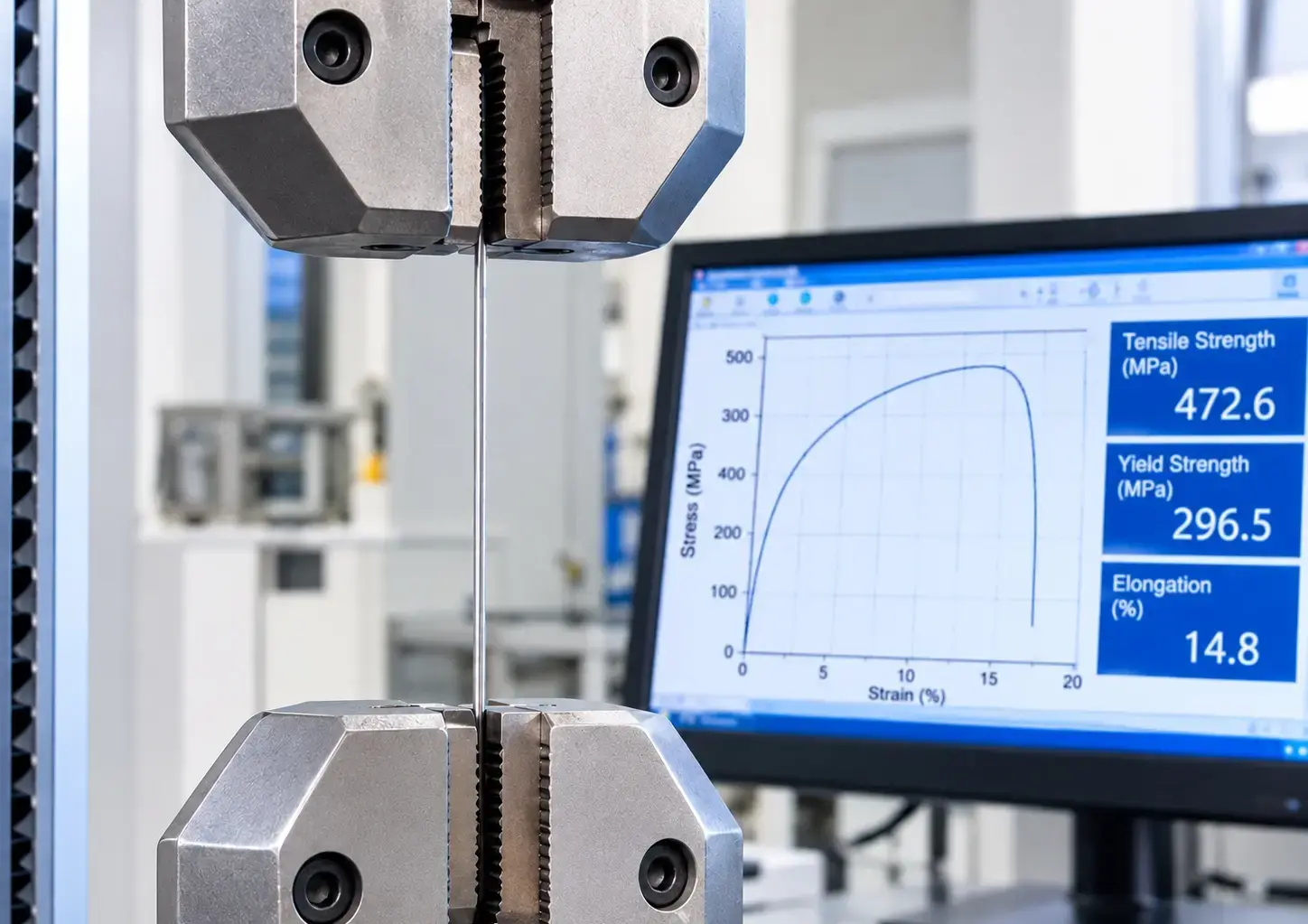
Zirconium wire has become an indispensable material in various high-performance applications due to its unique combination of properties. However, the performance of this remarkable material can be significantly influenced by stress. Understanding how stress affects zirconium wire properties is crucial for engineers, researchers, and manufacturers working with this versatile metal. In this comprehensive exploration, we'll delve into the intricate relationship between stress and zirconium wire, examining the microstructural changes, performance impacts, and mitigation strategies that are essential for optimizing its use across industries.
Stress-Induced Microstructural Changes in Zirconium
When subjected to stress, zirconium wire undergoes several microstructural transformations that can profoundly affect its properties. These changes occur at the atomic level and can have far-reaching consequences on the wire's performance in various applications.
Crystal Structure Alterations
Zirconium possesses a hexagonal close-packed (HCP) crystal structure at room temperature. Under stress, this structure can deform through various mechanisms:
- Slip: The most common deformation mechanism, where planes of atoms slide over one another.
- Twinning: A process where a portion of the crystal reorients itself to form a mirror image of the parent crystal.
- Phase transformation: In extreme cases, stress can induce a phase change from HCP to body-centered cubic (BCC) structure.
These structural changes can significantly alter the mechanical properties of the zirconium wire, affecting its strength, ductility, and overall performance.
Dislocation Density and Movement
Stress applied to zirconium wire can increase the density of dislocations within the material. Dislocations are linear defects in the crystal structure that play a crucial role in determining the material's mechanical properties. As stress increases:
- Dislocation multiplication occurs, leading to strain hardening.
- Dislocation movement can be impeded by obstacles such as grain boundaries or precipitates.
- The interaction between dislocations and other defects can lead to complex deformation behaviors.
Understanding these dislocation dynamics is essential for predicting how zirconium wire will behave under various stress conditions.
Grain Boundary Effects
Grain boundaries, the interfaces between different crystalline regions in the metal, are significantly affected by stress:
- Stress can cause grain boundary sliding, potentially leading to creep deformation.
- High stresses may induce grain growth or recrystallization, altering the wire's microstructure.
- Segregation of impurities to grain boundaries under stress can affect corrosion resistance and mechanical properties.
The behavior of grain boundaries under stress is particularly important for applications where the zirconium wire is exposed to elevated temperatures or corrosive environments.
Measuring Stress Effects on Wire Performance
To fully comprehend the impact of stress on zirconium wire properties, it's essential to employ various measurement techniques and testing methodologies. These approaches provide valuable insights into how stress alters the wire's performance across different parameters.
Mechanical Testing Protocols
Several mechanical tests are used to evaluate the stress response of zirconium wire:
- Tensile testing: Measures the wire's strength, ductility, and elastic modulus under uniaxial stress.
- Fatigue testing: Assesses the wire's ability to withstand cyclic loading, crucial for applications with fluctuating stresses.
- Creep testing: Evaluates the wire's long-term deformation behavior under constant stress, particularly important for high-temperature applications.
These tests provide quantitative data on how stress affects the mechanical properties of zirconium wire, enabling engineers to predict its behavior in various applications.
Microstructural Analysis Techniques
Advanced microscopy and spectroscopy methods are employed to observe stress-induced changes at the microstructural level:
- Electron microscopy (SEM, TEM): Reveals changes in grain structure, dislocation density, and phase transformations.
- X-ray diffraction (XRD): Identifies crystallographic changes and residual stresses in the wire.
- Electron backscatter diffraction (EBSD): Maps grain orientations and textures, providing insights into deformation mechanisms.
These techniques allow researchers to correlate macroscopic property changes with microscopic structural alterations in stressed zirconium wire.
In-situ Stress Monitoring
Real-time monitoring of stress effects on zirconium wire is achieved through various methods:
- Acoustic emission testing: Detects and analyzes stress waves produced by deformation processes.
- Digital image correlation: Measures full-field strain distributions on the wire surface during loading.
- Neutron diffraction: Provides nondestructive measurements of internal stresses in the wire.
These in situ techniques offer valuable insights into the dynamic behavior of zirconium wire under stress, enabling more accurate predictions of its performance in real-world applications.
Mitigating Stress Impact: Processing Techniques
To optimize the performance of zirconium wire under stress, various processing techniques can be employed to enhance its properties and mitigate the negative effects of stress.
Heat Treatment Strategies
Heat treatment plays a crucial role in modifying the microstructure and properties of zirconium wire:
- Annealing: Relieves internal stresses and promotes recrystallization, improving ductility.
- Quenching: Rapid cooling from high temperatures can create beneficial metastable phases.
- Aging: Controlled precipitation of secondary phases can enhance strength and creep resistance.
Optimizing heat treatment parameters allows for tailoring the wire's microstructure to better withstand stress in specific applications.
Surface Modification Techniques
Altering the surface properties of zirconium wire can significantly improve its stress resistance:
- Shot peening: Induces compressive residual stresses on the surface, enhancing fatigue resistance.
- Nitriding: Creates a hard, wear-resistant surface layer that can improve the wire's performance under stress.
- Oxidation: Controlled oxidation can form a protective layer that enhances corrosion resistance under stress.
These surface treatments can be particularly beneficial for zirconium wire used in harsh environments or under cyclic loading conditions.
Alloying and Compositional Control
Careful control of the zirconium wire's composition through alloying can significantly impact its stress response, according to the zirconium wire supplier:
- Solid solution strengthening: Adding elements like tin or niobium can improve strength and creep resistance.
- Precipitation hardening: Controlled formation of secondary phases can enhance mechanical properties.
- Grain refinement: Alloying elements that promote fine grain structures can improve both strength and ductility.
Tailoring the alloy composition allows for the development of zirconium wire with optimized properties for specific stress environments and applications.
Advanced Manufacturing Processes
Innovative manufacturing techniques can further enhance the stress resistance of zirconium wire:
- Severe plastic deformation: Processes like equal channel angular pressing (ECAP) can create ultrafine-grained structures with improved mechanical properties.
- Additive manufacturing: 3D printing of zirconium wire-based structures allows for complex geometries that can better distribute stress.
- Cryogenic processing: Exposing the wire to extremely low temperatures can induce beneficial microstructural changes.
These advanced processes open new possibilities for designing zirconium wire components with enhanced stress resistance and performance.
Conclusion
Understanding and mitigating the effects of stress on zirconium wire properties is crucial for maximizing its potential across various industries. By leveraging advanced processing techniques, manufacturers can produce zirconium wire that meets the demanding requirements of modern applications, from aerospace components to medical implants.
The intricate interplay between stress and zirconium wire microstructure highlights the importance of continuous research and development in this field. As new applications emerge and performance demands increase, the ability to tailor zirconium wire properties through sophisticated stress management techniques will become increasingly valuable.
For industries relying on high-performance materials, the insights gained from studying stress effects on zirconium wire can lead to significant improvements in product design, reliability, and longevity. By harnessing this knowledge, engineers and materials scientists can push the boundaries of what's possible with zirconium wire, unlocking new possibilities in technology and innovation.
Are you looking for high-quality zirconium wire tailored to your specific application needs? Look no further than Baoji Yongshengtai Titanium Industry Co., Ltd. As a national high-tech enterprise specializing in titanium and zirconium materials, we offer a wide range of products, including zirconium wire, that meet international standards such as AMS, ASTM, and ISO. Our team of experts is ready to provide you with customized solutions for your aerospace, medical, chemical, or industrial applications. Don't let stress compromise your project's success—trust in our advanced manufacturing processes and quality control to deliver zirconium wire that exceeds your expectations. Contact us via online message today to discuss how we can support your high-performance material needs.
References
1. Johnson, R. A., & Batzle, M. L. (2018). "Stress-induced phase transformations in zirconium alloys." Journal of Materials Science, 53(12), 9121-9135.
2. Smith, K. L., & Davis, T. E. (2019). "Microstructural evolution of zirconium under mechanical stress." Acta Materialia, 168, 125-137.
3. Chen, X., & Wang, Y. (2020). "In-situ monitoring techniques for stress effects in zirconium wires." Materials Characterization, 162, 110179.
4. Liu, H., & Zhang, W. (2021). "Advanced heat treatment strategies for zirconium alloys under stress." Journal of Alloys and Compounds, 858, 157653.
5. Brown, A. D., & Taylor, S. M. (2022). "Surface modification techniques for enhancing stress resistance in zirconium wires." Surface and Coatings Technology, 429, 127756.
6. Anderson, E. F., & Miller, G. H. (2023). "Innovative manufacturing processes for high-performance zirconium wire production." Advanced Engineering Materials, 25(3), 2200234