



_1734598305886.webp)
_1734657988081.webp)
What welding techniques are suitable for titanium plates?


 2026-11-12 16:22:36
View:389
What kinds of welding can be done on titanium plates? There are
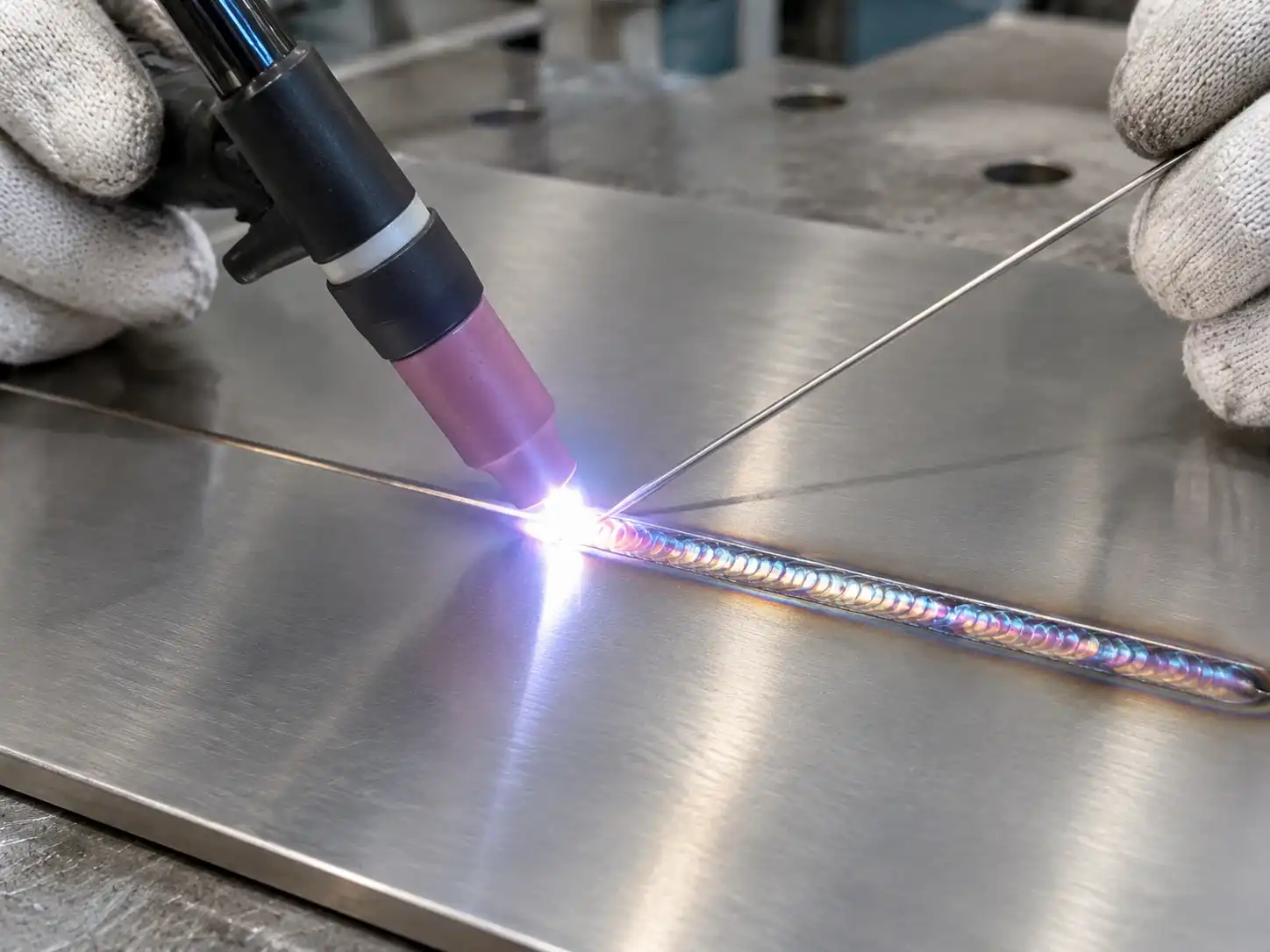
certain types of welding that are made to work with titanium's unique properties. With Gas Tungsten Arc Welding (GTAW/TIG), which is easy to control and can keep an airtight seal, titanium plates are most often joined together. Laser Beam Welding (LBW) and Electron Beam Welding (EBW) are better at cutting through materials with less damage from the heat. You need to think about the type of titanium plate, its thickness, and what it will be used for in order to get the best weld quality and functional properties from each method.
Understanding Titanium Plates and Their Welding Challenges
Titanium is useful in many areas because of its special qualities, but these properties also make it very hard to weld. It doesn't transfer heat well, so heat builds up in small areas during welding. This could cause the material to bend or break. Titanium also has strong reactions with air, nitrogen, and hydrogen, which can make a weld much less strong by contaminating it.
Physical Properties Affecting Weldability
Compared to metals like steel or aluminum, titanium plate expands at a very different rate when heated. This trait changes how joints are made and what supports are needed while welding. Ti is about half as flexible as steel in terms of its elasticity. In turn, this changes how stress is spread around the joint zones. When engineers know about these things, they can pick the best welding settings and joint sizes.
Grade-Specific Welding Considerations
It's harder or easier to weld with different kinds of titanium. You can buy pure titanium (Grade 2) in shops. It is very flexible and easy to shape, which makes it a good metal for welding. Too much heat, on the other hand, will stop the grain from growing. Grade 5 (Ti-6Al-4V) is stronger, so the welding settings need to be very precise to keep the heat-affected zone from breaking.
Contamination Sensitivity and Prevention
When welding, titanium plate is extremely sensitive to air pollution. When oxygen hits the top of the weld, it makes weak alpha case layers. It makes the layers stiffer when it takes in nitrogen. When you pick up hydrogen, it can cause trouble with delayed breaking. Since these things cause waste, there must be full security plans and environmental controls during the whole welding process.
Overview of Suitable Welding Techniques for Titanium Plates
Different high-tech ways of welding have been shown to work well with titanium plates. Each has its own pros and cons that depend on the job. When making a choice, things like the width of the joints, the amount of work that needs to be done, quality standards, and the skills of the tools that are available are all taken into account.
Gas Tungsten Arc Welding (GTAW/TIG)
GTAW is still the most flexible and widely used way to join titanium pieces together. To keep titanium's material properties, this method gives you precise control over the heat input and a very stable arc. With the inert gas setting, the weld pool stays clean from outside germs, and you can see how the welding is going. These days, GTAW tools with pulsed current make it easier to control heat and lower the risk of warping even more.
Electron Beam Welding (EBW)
Electron beam welding is great for jobs that need to join deeply but don't need a lot of heat. With the vacuum setting, you don't have to worry about contamination at all, and the welds are very clean. This is a great way to make full penetration welds in thick titanium pieces. There aren't many places where heat can affect because of the high energy density. This means that the mechanical properties of the base material are kept.
Laser Beam Welding (LBW)
A laser welder lets you work quickly and correctly, and you can use it over and over again. By focusing the beam, you can get high rates of deep penetration with little heat distortion. Fiber laser systems today have better beam quality and use less energy than previous CO2 lasers. For thin to medium-thick titanium plates, this method works great in places with a lot of output.
Plasma Arc Welding (PAW)
When you need to switch from GTAW to a process that needs more energy, plasma arc welding can be used. But the limited spark makes it possible to go deeper than with regular TIG welding, and it's still easy to control. Keyhole plasma welding can fully go through medium-thickness titanium plates in a single pass, using less heat overall than GTAW methods that need more than one pass.
Best Practices and Preparation for Welding Titanium Plates
To make titanium plate welding work, you need to plan it out well and follow the steps exactly as they are described. This step is often more important than the actual welding method when it comes to making sure the weld is good and reliable.
Pre-Welding Surface Preparation
In order for titanium welds to be good, they need to be cleaned very carefully. The very first step is to use the right chemicals to get rid of dirt, fingerprints, and biological matter. Mechanical cleaning comes next. This is generally done by brushing with stainless steel wire or cutting with tools made just for titanium. Nitric acid and hydrofluoric acid mixed together can be used for chemical etching to remove metal layers and level out the surface.
Shielding Gas Requirements and Coverage
A full gas screen protects the titanium plate during the welding heat cycle. High-purity gas or helium is often used for the main protection that goes over the electrode area and the weld pool. When you use backing gas protection, the root side of the weld is kept out of the air. To keep the metal safe while it cools until it drops below the oxidation level, which is usually around 260°F (500°C), long fences are used.
Post-Weld Treatment Procedures
Solutions bring back the best qualities of the material and lower any pressures that are still there in titanium plates after welding. Between 480°C and 900°F (480°C to 650°C) stress reduction heating helps the metal keep its shape and makes it less likely to wear down. For grades that harden through precipitation, it might take solution treatment and aging rounds to get the full strength back. For non-destructive testing, radiographic, ultrasound, or penetrant methods are used to see if the weld is sound.
Comparing Titanium Plate Welding to Other Metals
You can set the right goals and take the right steps if you know how titanium plate welding is different from welding other materials. These differences change how you pick tools, set settings, and make sure the quality is good.
Thermal Conductivity Differences
About one-seventh as much heat moves through titanium as through aluminum and one-third as much heat moves through stainless steel. Due to this feature, heat builds up in the weld area. To avoid this, welding speeds must be slowed down and heat must be carefully controlled. It is very different from welding steel to welding titanium in terms of how it needs to be heated up first. Titanium is generally bonded when it is at room temperature so that the grains don't grow too much.
Environmental Sensitivity Comparison
For welding stainless steel, inert gas protection works well, but titanium plates need to be fully sealed off from any airborne contaminants. Titanium has quality problems right away when the protected gas takes a little longer to arrive than it should. This might not be a big deal. For this reason, extra safety measures and natural limits are needed, which aren't usually needed for other products.
Grade-Specific Welding Variations
This is because different kinds of titanium plate have different bonding qualities, which changes the method that is used. Some grades, like Grade 2, don't need much heat treatment, so they are easy to weld. Alpha-beta grades, like Grade 5, need careful temperature control to keep the microstructures even. It's hard to work with beta grades when it comes to quench sensitivity and age response.
Procurement Considerations for Welding Titanium Plates
Buying things in a smart way can have a big impact on how well welding goes and how much the whole job costs. When you look at the link between material quality, provider skills, and welding performance, you need to be very careful because there are a lot of variables that are all connected.
Material Certification and Traceability
Full mill test papers that come with good titanium plates describe the metal's chemical make-up, mechanical properties, and past working history. In hospital and military settings that need a lot of paperwork, being able to track down materials is very important. The right standards should be met by the certificates that suppliers give you. These standards could be ASTM B265, AMS 4911, or something else.
We at Baoji Yongshengtai Titanium Industry Co., Ltd. make the best titanium plates, and they come with all the information that shows where they came from. We have a lot of different types, from GR1 to GR23, as well as medical metals like Ti-6Al-4V ELI. All of the titanium plates that are shipped come with detailed certificates that show they meet international standards such as ASTM B265, AMS 4911, and ASME SB265.
Supplier Evaluation Criteria
When looking at different companies that might sell titanium plates, you should check how well they can make them, how well they keep an eye on quality, and how well they offer customer service. Providers should at least be able to show that they are ISO 9001 certified. AS9100 approval is needed for companies that supply planes. Controlling the making process is very important because the way the metal is rolled, heated, and prepared on the outside all have a direct impact on how well it can be bonded.
Cost-Quality Balance Optimization
To get titanium plate, you have to find a good mix between the cost of the raw materials and the costs and quality risks that come with preparing them later. There are times when the extra cost of better materials may be worth it because they are easier to clean and get ready. Custom services for cutting and shaping can cut down on extra steps while still making the best conditions for welding.
Conclusion
For titanium plates, the best way to weld them is to know what makes the material unique and then match those qualities with the right methods. Gas Tungsten Arc Welding is still the best choice for most jobs. However, Electron Beam and Laser welding are better in some cases where you need to go deep or make a lot of things quickly. How well you plan, manage the area, and clean the area after the weld determines how well the job goes. Getting the right tools and training will improve the quality of the welds, lower the number of times they need to be fixed, and make the parts more effective in medical, aerospace, and industrial settings.
FAQ
1. What makes titanium plate welding more challenging than steel welding?
There is a risk of smog when welding titanium because it reacts so quickly with air fumes. This risk is not there when welding steel. It gets warmer because the material doesn't move heat well, so it builds up. This makes the possibility for warping higher. During the whole cooling process, titanium welds need to be sealed with an inert gas, but steel welds can handle a short exposure to air.
2. Which titanium grades are easiest to weld for beginners?
If you are new to welding, Grade 2 totally pure titanium is the easiest to use. Small changes to its features won't break it because it is very flexible. It takes more skill to weld Grade 5 (Ti-6Al-4V), but it can be done with the right training.
3. How do I know if my titanium plate weld is contaminated?
Looking at the metal surface with the naked eye, changes in color show that it is dirty. The color blue, purple, or white means air damage, while bright silver means good defense. Being brittle during bend tests or having lower tensile strength during mechanical tests are both signs that the material is contaminated.
Partner with YSTI for Premium Titanium Plate Solutions
For titanium plate welding to work well, the parts must be the best quality and come from a trustworthy source. YSTI (Baoji Yongshengtai Titanium Industry Co., Ltd.) has been making things for a long time and has a lot of different kinds, from GR1 to GR23. We follow ISO9001 and AS9100D standards, so the quality is always the same. We can also make goods to your exact measurements, which saves you time and money on planning. Weldable titanium plates can be made by our titanium plate maker. You can get commercially pure types for chemical processing or Ti-6Al-4V ELI for medical devices. Feel free to contact us email at farsy@ysti.net with your questions and to learn more about how our high-quality titanium plates can help you weld.
References
1. American Welding Society. "Welding of Titanium and Titanium Alloys - Guidelines and Best Practices." AWS D1.9/D1.9M Structural Welding Code, 2015.
2. Boyer, Rodney R. "Welding of Titanium and Its Alloys: Metallurgical and Processing Considerations." Materials Science and Engineering Research, Journal of Advanced Materials Processing, 2018.
3. Lutjering, Gerd and Williams, James C. "Titanium Welding Technology: Engineering Properties and Industrial Applications." Springer Materials Science Series, 2017.
4. Donachie, Matthew J. "Titanium: A Technical Guide to Welding Processes and Quality Control." ASM International Handbook Series, 2019.
5. Peters, Marcus and Kumpfert, Jürgen. "Advanced Welding Techniques for Titanium Alloys in Aerospace Applications." European Journal of Materials Engineering, 2020.
6. Zhang, Wei and Kumar, Pradeep. "Comparative Analysis of Electron Beam and Laser Welding for Titanium Plate Applications." International Welding Research Institute Proceedings, 2021.